
预约普吉岛 派纳乐长寿健康管理中心
请填写您的联系信息
我们重视您的时间,并致力于提供高品质的医疗与健康管理服务。请填写以下表格预约医生咨询。 日程 一个 预约 去看医生。
Hair Transplant IN PHUKET, THAILAND
At Plenary Longevity Wellness, we provide comprehensive hair transplant services in Phuket, Thailand, combining medical expertise, personalized hairline design, modern transplantation techniques, and structured post-procedure care.
Every treatment begins with an individual consultation and scalp assessment. Our medical team evaluates your hair loss pattern, donor area, hair density, scalp condition, medical history, and long-term goals before recommending the most appropriate treatment plan.
Our goal is not simply to transplant hair — but to create a natural, balanced result that complements your facial features and supports your long-term hair health.
Complimentary Consultation Available — In-person and online consultations are available for local and international patients.
Why Choose Plenary for Your
Hair Transplant?
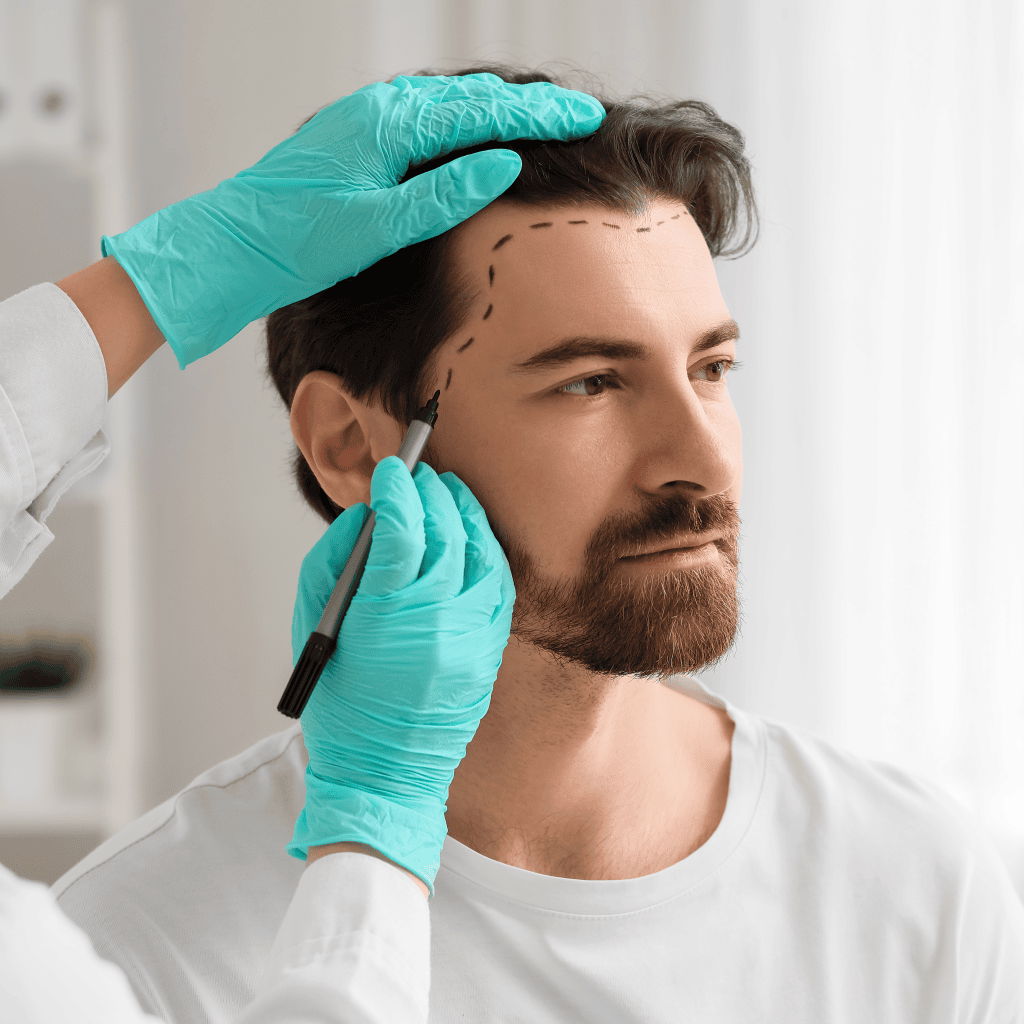
Personalized Hairline Design – Your hairline is carefully planned according to your facial proportions, age, existing hair pattern, donor availability, and long-term hair loss considerations.
Comprehensive Medical Assessment – Before treatment, our medical team assesses both the recipient and donor areas to determine whether hair transplantation is appropriate for you.
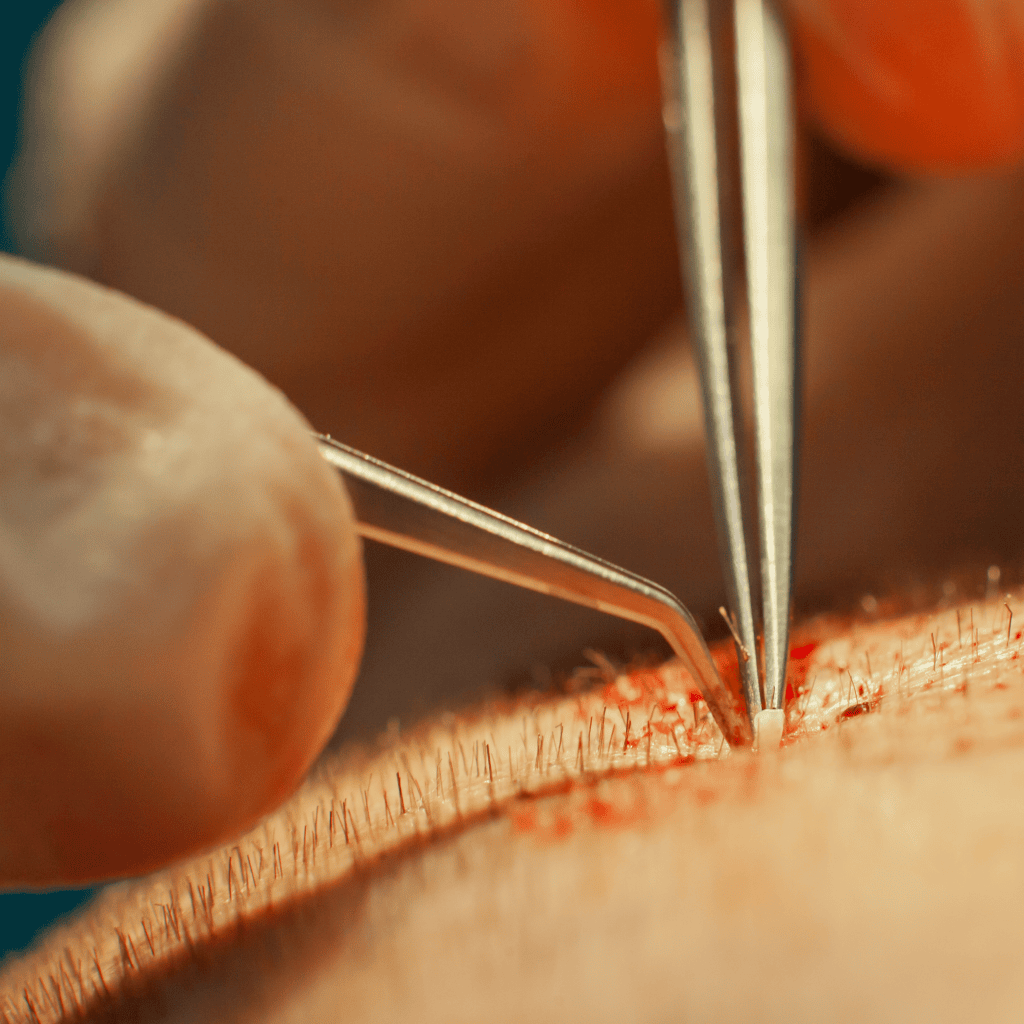
Modern Hair Transplantation Techniques – Individual follicular units are carefully harvested from the donor area and transplanted into areas affected by thinning or hair loss.
Focus on Natural Appearance – Hair direction, angle, distribution, and density are carefully considered during implantation to create a natural-looking result.
Structured Aftercare – Our care continues beyond the procedure, with post-treatment instructions, medications when medically appropriate, wound-care guidance, and scheduled follow-up assessments.
International Patient Support – Located in Phuket, Plenary welcomes patients from Thailand and around the world. Our team can assist international patients with treatment planning and coordination before arrival.
Who May Be Suitable for a Hair Transplant?
Hair transplantation may be considered for men and women experiencing:
– Male pattern hair loss
– Female pattern hair thinning
– Receding hairline
– Thinning frontal hairline
– Temple recession
– Crown or vertex thinning
– Localized areas of permanent hair loss
– Previous hair transplant requiring additional density or correction
– Hair loss where the donor area remains suitable for transplantation
Suitability varies between individuals. A consultation is required to evaluate the cause and pattern of hair loss, donor-area quality, medical history, expectations, and potential for future hair loss.
Your Hair Transplant Consultation: A successful hair transplant begins with careful planning.
During your consultation, our medical team may evaluate: Hair Loss Pattern. We assess the location, severity, and progression of your hair loss.
Donor Area: The density, quality, and availability of follicles in the donor area are evaluated.
Scalp Condition: Your scalp and existing hair are examined to identify factors that may affect treatment planning.
Hair Characteristics: Hair thickness, texture, color, curl pattern, and density can influence the visual result and number of grafts required.
Hairline Planning: A personalized hairline is designed according to your facial structure, age, existing hair, donor capacity, and long-term appearance.
Medical History: Your health history, medications, previous procedures, and relevant conditions are reviewed before treatment.
Following the assessment, the doctor will discuss whether hair transplantation is appropriate and explain the recommended treatment strategy.
Our Hair Transplant Process
Your journey begins with a consultation with our medical team. We evaluate your hair loss, scalp condition, donor area, medical history, and expectations before developing your individualized treatment plan. Online consultations are also available for international patients before traveling to Phuket.
Before the procedure, the doctor designs your proposed hairline and determines the areas requiring transplantation. The number and distribution of grafts are planned based on your individual needs and donor capacity.
Hair follicles are typically harvested from a suitable donor area, commonly the back or sides of the scalp. These areas are generally selected because the follicles tend to be more resistant to the processes responsible for common pattern hair loss.
Follicular units are carefully extracted from the donor area using the selected transplantation technique. The medical team handles the grafts carefully to maintain their condition before implantation.
The recipient area is prepared according to the planned hairline, distribution, direction, and density. Particular attention is given to the angle and direction of placement to support a natural appearance.
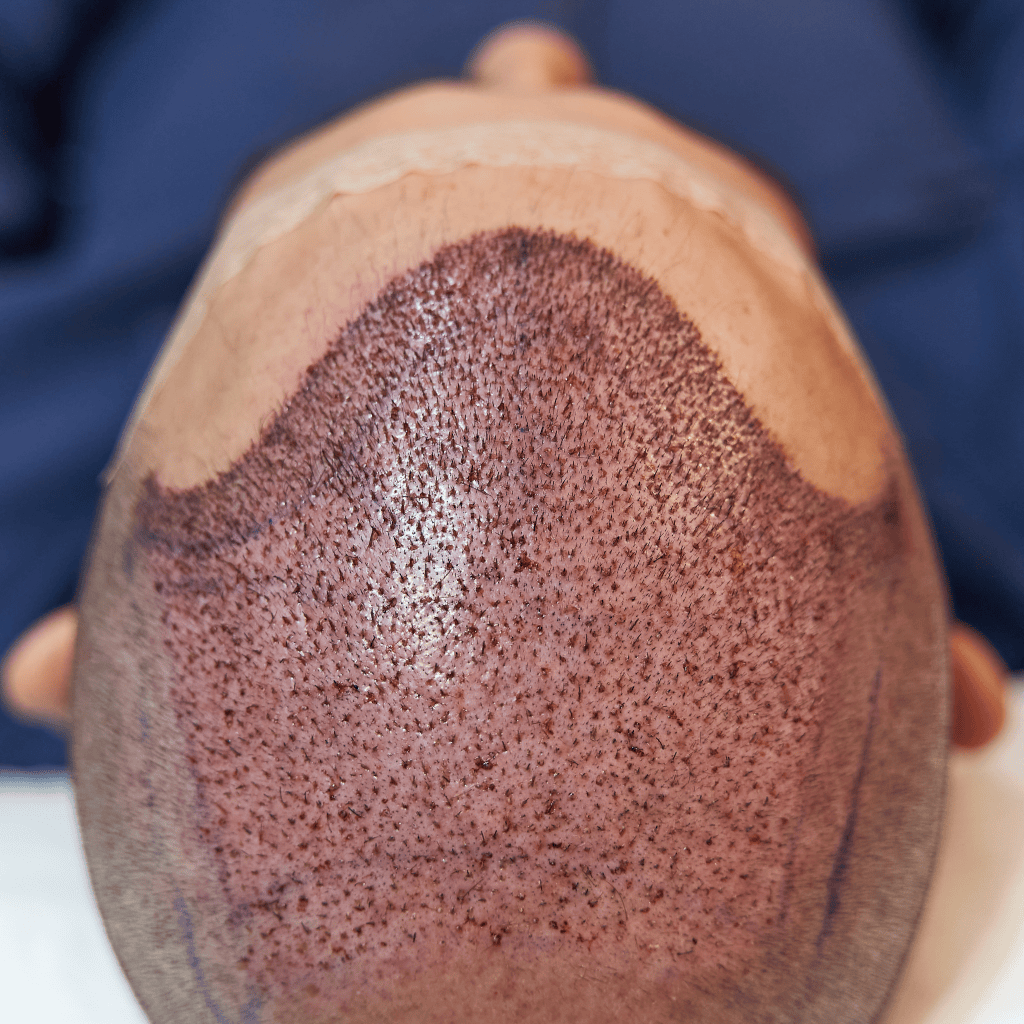
Prepared follicular units are implanted into the planned recipient areas. Placement is individualized according to the patient’s existing hair pattern, facial proportions, and treatment objectives.
After the procedure, our team provides detailed instructions covering:
– Donor-area care
– Recipient-area care
– Hair washing
– Sleeping position
– Physical activity
– Sun exposure
– Medication use
– Scalp care
– Follow-up appointments
Our team remains available throughout your recovery period.
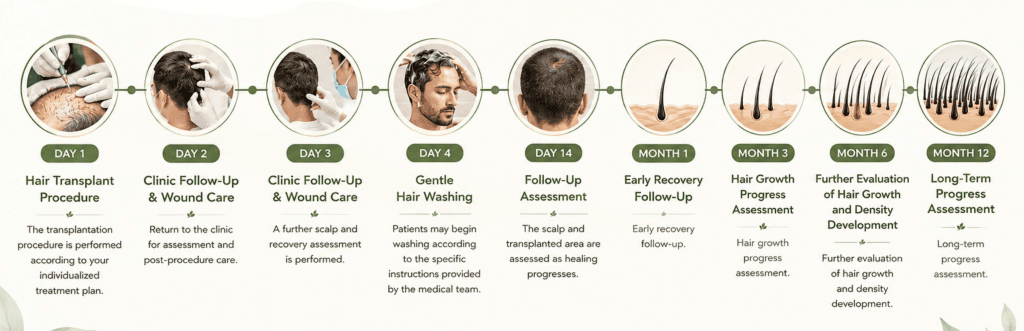
Hair Transplant Treatment Timeline
What Happens After a Hair Transplant?
Understanding the hair-growth cycle is an important part of the process.
First 1–2 Weeks – Mild redness, swelling, sensitivity, crusting, or scabbing may occur around the treated areas. These effects generally improve as healing progresses.
Weeks 2–8 – Some transplanted hairs may shed. This can be part of the normal post-transplant hair cycle and does not necessarily mean that the follicles have been lost.
Around Months 3–4 – Early new hair growth may begin to become noticeable.
Around Months 5–6 – More visible growth and changes in density may develop.
Around Months 9–12 – Hair growth generally becomes more mature and noticeable.
12 Months and Beyond – The final maturation timeline varies depending on the individual and the area treated. Crown areas may sometimes take longer to mature.
Hair growth rates and final outcomes vary between patients.
What’s Included in Your Hair Transplant Care?
Your treatment program is designed to provide support throughout the procedure and recovery process. Depending on your individualized treatment plan, care may include:
– Hair transplant procedure
– Medical consultation
– Hair and scalp assessment
– Personalized hairline design
– Doctor and medical team
– Pre-procedure assessment
– Local anesthesia and/or appropriate medication as determined by the medical team
– Post-procedure wound care
– Post-procedure medications when medically indicated
– Baby shampoo for initial scalp care
– Hair-support supplements as recommended
– Scalp-care products as recommended
– Follow-up assessments
– Recovery guidance
– Follow-up care for up to 12 months
Exact inclusions may vary according to the selected package and individual medical requirements.
Post-Transplant Hair Support
Hair transplantation addresses areas where follicles are transplanted, but maintaining the health of your existing hair may also be important. Depending on your condition, the doctor may recommend additional hair-support strategies. These may include medically appropriate oral or topical treatments and regenerative hair therapies.
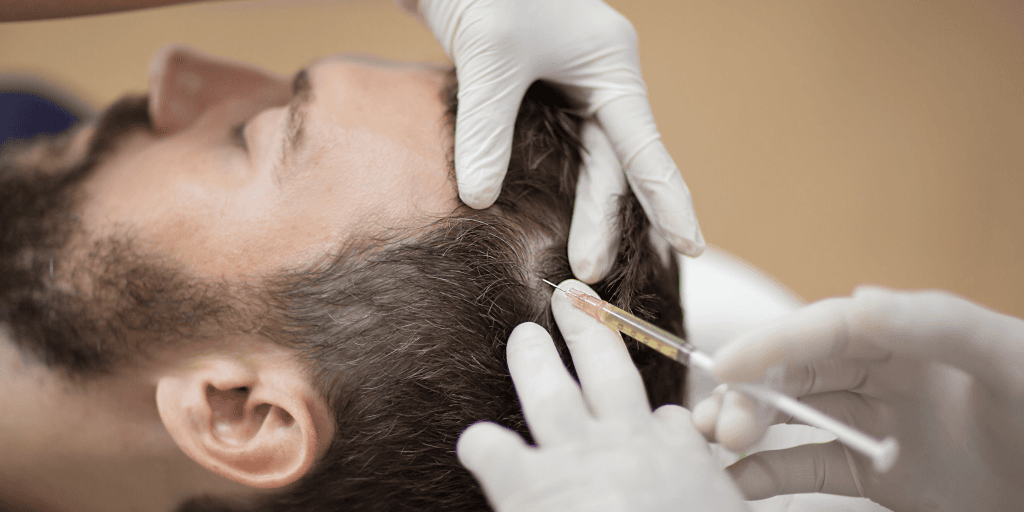
PRP Hair Therapy
Platelet-Rich Plasma (PRP) uses components prepared from the patient’s own blood and may be recommended as part of an individualized scalp and hair-support program.

Exosome Hair Therapy
Exosome-based scalp treatment may be considered as an additional regenerative hair-care option following medical assessment.

Hair Mesotherapy
Selected nutrients or therapeutic substances may be administered to the scalp depending on the patient’s condition and treatment plan.
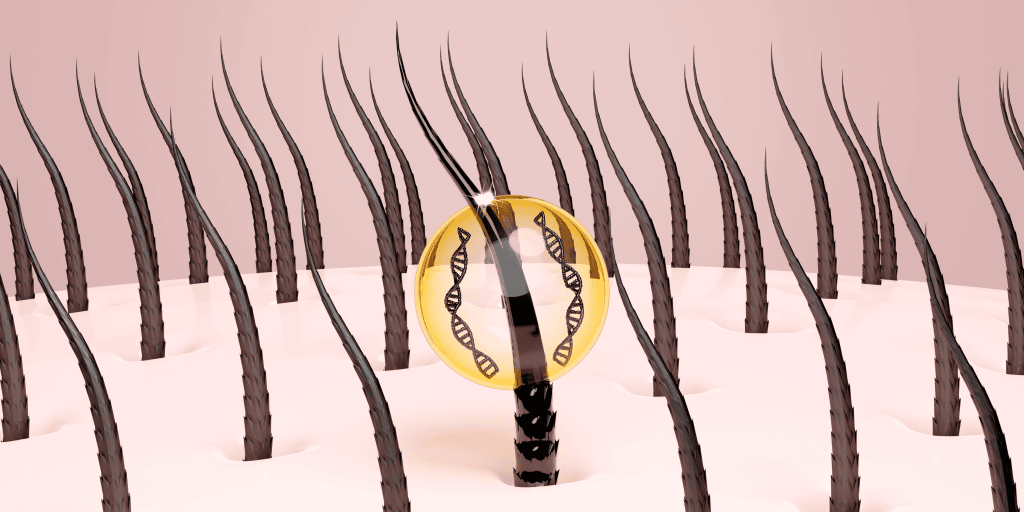
Regenerative Hair Programs
For selected patients, our medical team can discuss additional regenerative approaches as part of a comprehensive hair-restoration strategy.
These treatments are optional and are recommended only after individual medical assessment.
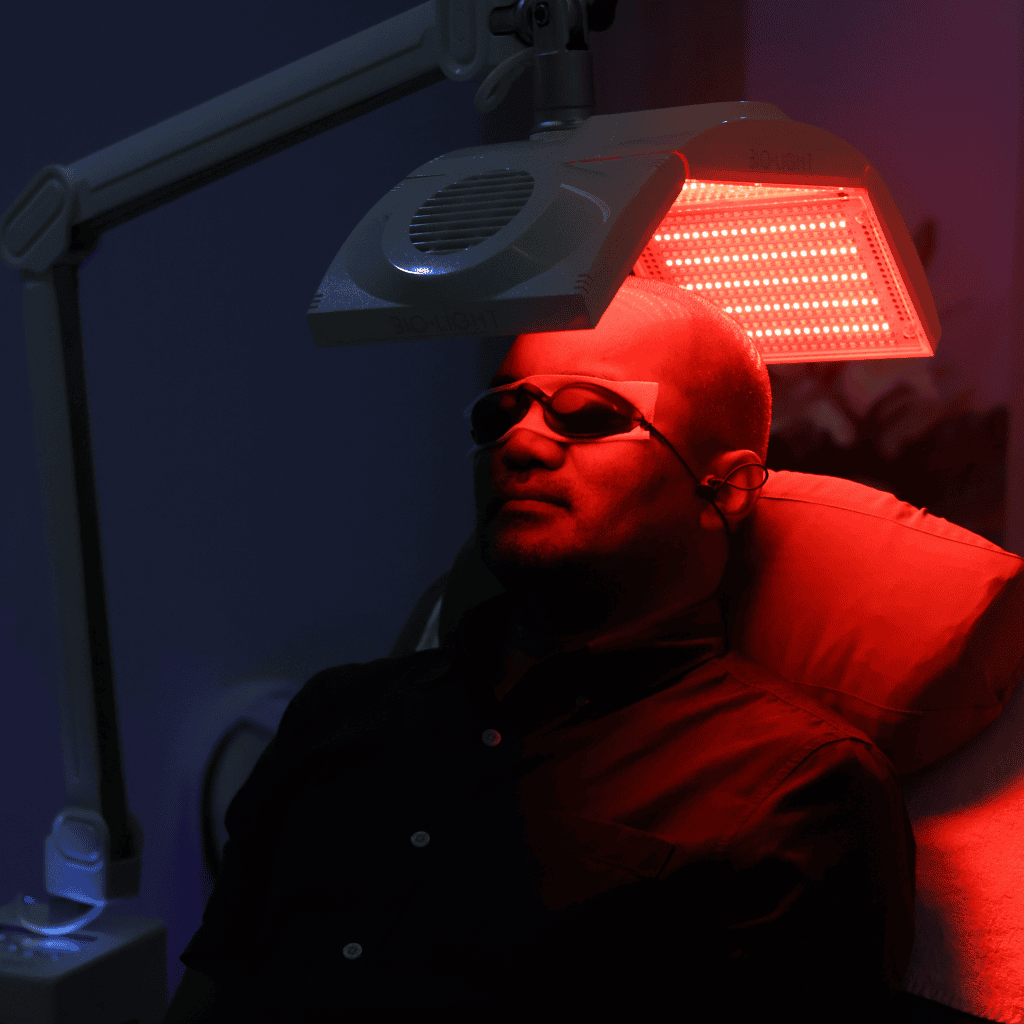
Selected hair transplant programs may include red light therapy as part of post-procedure scalp care.
Sessions may be scheduled during key recovery stages, such as:
Day 2 • Day 3 • Day 14 • Month 1
The exact schedule is determined by the medical team according to the patient’s treatment and recovery.
A Thoughtfully Designed Hair Restoration Journey.
Hair Transplant for International Patients
Plan Your Hair Restoration Journey in Phuket
Plenary Longevity Wellness welcomes international patients seekin
Before traveling, you may arrange an online consultation with our team.
You may be asked to provide clear photographs of:
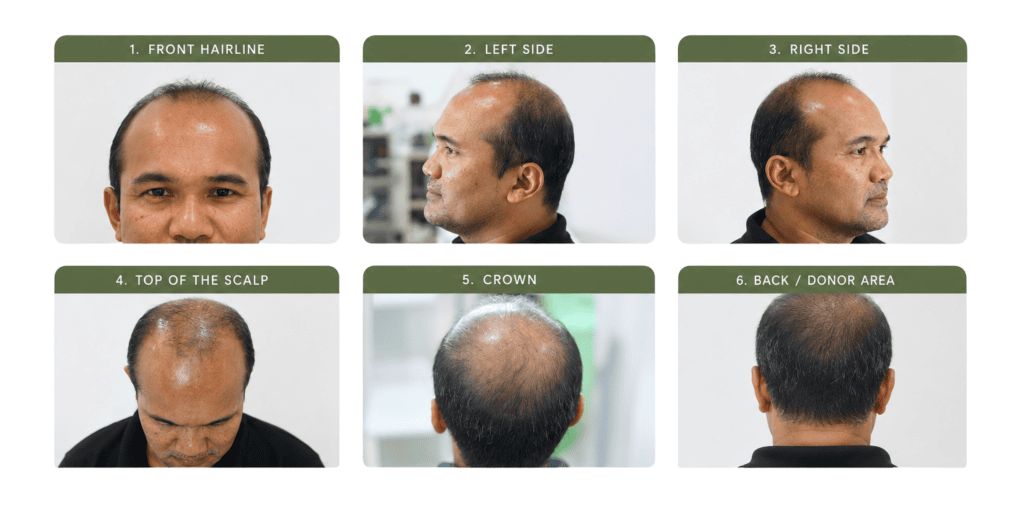
This allows our medical team to perform a preliminary assessment before your visit. Once your treatment plan is confirmed, our patient coordination team can help you understand the procedure schedule, recommended length of stay, preparation requirements, and follow-up plan.
How Long Should I Stay in Phuket?
The recommended length of stay depends on your procedure and individual recovery plan.
Patients should allow sufficient time for the procedure and early post-treatment assessments.
Our team will recommend an appropriate schedule during your consultation, particularly if you are traveling internationally.
Preparing for Your Hair Transplant
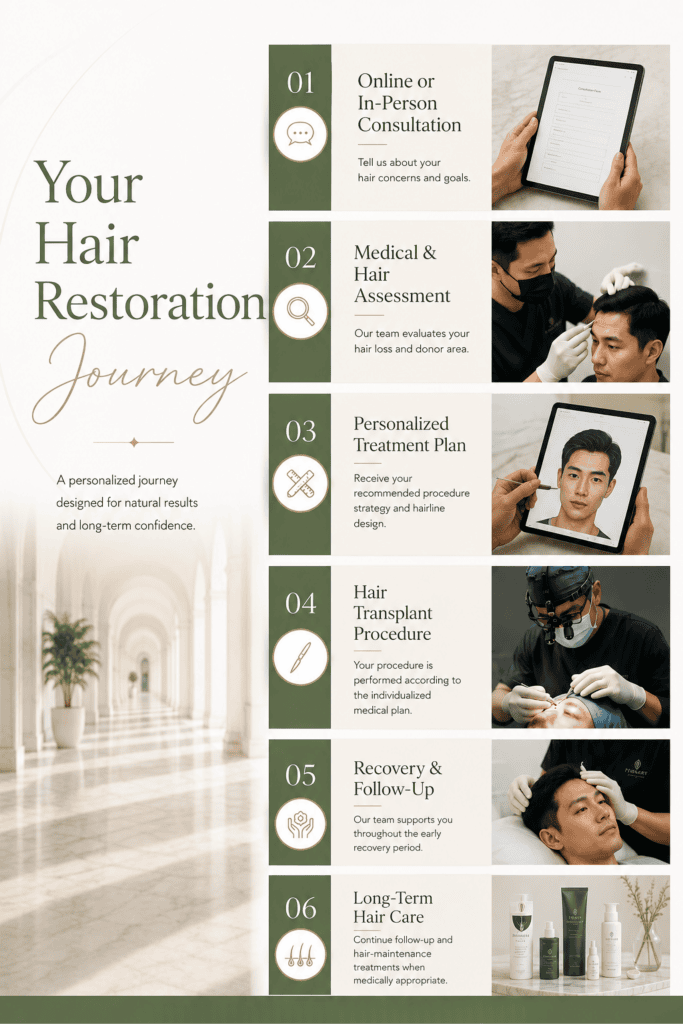
Your Hair Restoration Journey
Online or In-Person Consultation
Tell us about your hair concerns and goals.
Medical & Hair Assessment
Our team evaluates your hair loss and donor area.
Personalized Treatment Plan
Receive your recommended procedure strategy and hairline design.
Hair Transplant Procedure
Your procedure is performed according to the individualized medical plan.
Recovery & Follow-Up
Our team supports you throughout the early recovery period.
Long-Term Hair Care
Continue follow-up and hair-maintenance treatments when medically appropriate.
Before your procedure,
you will receive individualized medical instructions.
Depending on your medical history and treatment plan, these may include recommendations regarding:
Do not discontinue prescribed medication without discussing it with the appropriate healthcare professional.
Hair Transplant Aftercare
Proper aftercare is an important part of the hair transplant process. Patients should carefully follow the instructions provided by the medical team.
Why Phuket?
Combining your treatment with a stay in Phuket can provide a comfortable environment for the early recovery period. Plenary Longevity Wellness provides international patients with access to hair restoration, aesthetic medicine, preventive health, and longevity services within one medical wellness destination.
A: Hair follicles used for transplantation are generally selected from donor areas that are relatively resistant to common pattern hair loss. However, existing non-transplanted hair can continue to thin over time.
For this reason, long-term hair-loss management may be recommended for some patients.
A: Hair transplantation is typically performed using local anesthesia. Patients may experience temporary pressure, sensitivity, or discomfort during or after the procedure.
Your medical team will discuss pain management and what to expect before treatment.
A: There is no single number suitable for every patient. The number of grafts depends on factors including:
A medical assessment is required to provide an individualized recommendation.
A: Patient safety and responsible donor-area management are more important than reaching a predetermined graft number.
The number of grafts that can be safely harvested and transplanted depends on your individual donor area and will be determined by the medical team.
A: Hairline design, follicle distribution, hair direction, implantation angle, and density planning all contribute to the appearance of a hair transplant. Our treatment planning focuses on creating a result that is appropriate for your individual facial structure and existing hair pattern.
A: New growth commonly begins to become noticeable several months after transplantation. Hair density and maturity continue to develop gradually. More substantial changes are often observed between approximately 6–12 months, although individual timelines vary.
A: Temporary shedding of transplanted hair can occur during the weeks following the procedure. The follicles remain beneath the skin and may subsequently enter a new growth cycle.
A: This depends on the transplantation technique, size of the treatment area, donor area, hairstyle, and individual treatment plan.
The doctor can discuss available options during your consultation.
A: Yes. Some women with suitable patterns of hair loss and adequate donor areas may be candidates for hair transplantation.
Because female hair loss can have multiple causes, medical assessment is particularly important before treatment.
A: In selected cases, yes. A second procedure may be considered to increase density, address additional hair loss, or revise a previous transplant. Donor-area availability and scalp condition must first be assessed.
A: Patients typically receive a specific washing schedule following transplantation. At Plenary, early follow-up and wound care are performed before patients begin gentle self-washing according to the instructions provided by the medical team.
A: This depends on the stage of recovery and the type of hat. Avoid placing pressure or friction on newly transplanted grafts. Ask the medical team when it is safe to wear headwear.
A: As with any medical procedure, hair transplantation can involve potential risks and temporary side effects. These may include:
Individual risks are discussed during consultation and informed consent.
我们重视您的时间,并致力于提供高品质的医疗与健康管理服务。请填写以下表格预约医生咨询。 日程 一个 预约 去看医生。

电话: +66 65 241 2591
电子邮件: [email protected]
地址:
15/328 Moo 1, Soi Naya, Nai Harn Beach,Rawai, Muang, 普吉岛, 83130,
泰国


