
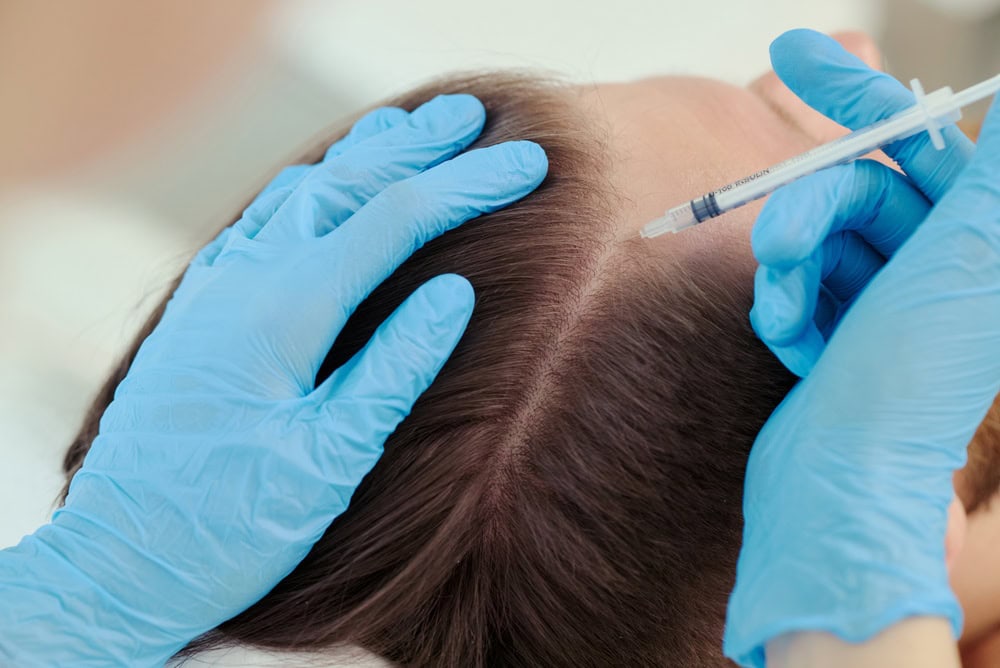
People who search for PRP hair treatment want to know whether it works and how many sessions are needed. Platelet-rich plasma, a concentrate of platelets from the patient’s own blood, is injected into the scalp to support hair growth. This guide summarizes the evidence, its limits, and how exosome therapy compares.
PRP for hair loss is a promising treatment for androgenetic alopecia, the medical term for pattern hair loss. A 2023 meta-analysis of 11 randomized trials found PRP increased follicle count, thickness, and density compared with placebo by concentrating platelets from the patient’s own blood into a plasma preparation. These platelets release growth factors, including platelet-derived growth factor (PDGF) and vascular endothelial growth factor (VEGF), shown to have potential effects in supporting hair follicle activity.
The International Society of Hair Restoration Surgery estimates that roughly 30 to 50 percent of patients may notice some improvement. Nevertheless, PRP does not generate new follicles and is not anticipated to restore hair in areas where follicles have been permanently lost. Preparation methods, injection techniques, and session schedules vary among clinics.
PRP hair restoration works with existing follicles, and candidates are usually people whose hair is thinning but not permanently gone.
PRP may not be appropriate when hair loss stems from active scalp disease or certain scarring alopecias, which call for different treatment. A clinical assessment before treatment is important to determine the suitable treatment for the diagnosis.
How many PRP sessions do I need to see hair regrowth? No single schedule suits every patient, but research outlines a common range. Higher frequency shows better results: a 2022 network meta-analysis of 25 trials in the Journal of Drugs in Dermatology found that more sessions and shorter intervals between them produced stronger outcomes across 10 different PRP regimens.
What to know before starting:
PRP is generally safe, though preparation methods and dosing are not standardized. It uses the patient’s own blood, and that origin does not make the procedure risk-free. Common temporary effects include:
Platelet disorders and certain medications may influence eligibility. Please provide your complete medical history and list of medications prior to treatment. Although rare, severe or escalating pain, expanding redness, or fever may develop following treatment – Seek immediate medical evaluation.
Is PRP or exosome therapy better for thinning hair? Exosomes for hair loss are preparations derived from cell cultures or other biological sources. They work by delivering small vesicles that carry signaling molecules between cells. These molecules may stimulate dermal papilla cells, support blood vessel formation around follicles, and help regulate local inflammation that contributes to hair loss. Early clinical data reports improvements in hair density, thickness, and patient satisfaction, with no serious adverse events recorded in the studies reviewed to date.
While research is promising, it is still in its early stages. Sample sizes remain small, study designs vary, and the US Food and Drug Administration states that no exosome products are currently FDA-approved.
Source, composition, and quality controls differ between preparations, and high-quality trials comparing exosome treatment directly with PRP are lacking. Discuss all your options with your doctor, including adding topical minoxidil alongside your treatment.
| Consideration | PRP hair treatment | Exosome treatment |
| Source | Prepared from the patient’s own blood | Derived from cell cultures or other biological sources |
| Proposed role | Uses platelet-derived factors to support follicle activity | Investigated for its role in cell signaling and tissue repair |
| Clinical evidence | Multiple randomized trials suggest benefits for pattern hair loss | Promising early findings; larger clinical trials are still needed |
| Standardization | Preparation and injection protocols vary between clinics | Product composition, sourcing, and manufacturing vary significantly |
| Safety | Strong safety profile from autologous blood | Depends on product quality, source, and regulatory oversight |
Table: PRP vs Exosome Treatment: Key Differences.
PRP currently has the stronger body of clinical research. The US Food and Drug Administration has yet to approve any exosome product. Patients should weigh the strength of the evidence, product transparency, practitioner qualifications, and cost. Established treatments such as topical minoxidil, a medication applied to the scalp, may also be relevant to a personalized hair loss plan.
Treatment plans can include more than one approach depending on the diagnosis and clinical goals. A doctor can consider established medical treatments such as topical minoxidil or, where appropriate, prescription options alongside PRP. Evidence for combining PRP with exosome therapy specifically is still developing, and patients should ask which combinations have reliable support for their type of hair loss and whether combining them adds costs or risks. The priority is treating the underlying cause of hair loss with the approaches that have the strongest evidence for that specific diagnosis.
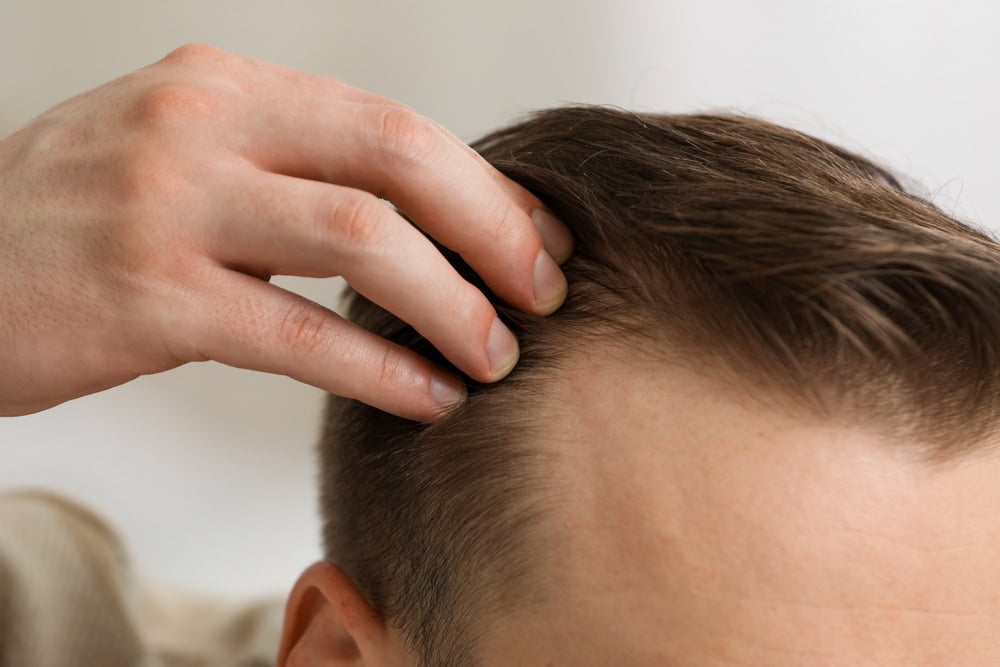
Plenary Longevity Wellness in Nai Harn, Phuket, offers PRP therapy and cellular therapy with exosomes within a physician-led clinic that brings longevity and aesthetics under one team. The treatments differ in their biological source and evidence base and should not be treated as interchangeable. Our doctors walk every patient through:
Patients can ask which preparation method or exosome product is used, what evidence supports it for their type of hair loss, and what the course, costs, and follow-up involve. Our doctors can review PRP therapy and exosome treatment with you in person. Schedule your appointment for a personalized assessment and a plan built around your unique physiology today.
References:

Dr. Thamonwan Trongpanyachot (Dr. Bee) is a licensed physician in Thailand (medical licence no. 75202) with 8 years of experience in healthcare. She earned her medical degree from the Medical University of Lublin, Poland.


